Description
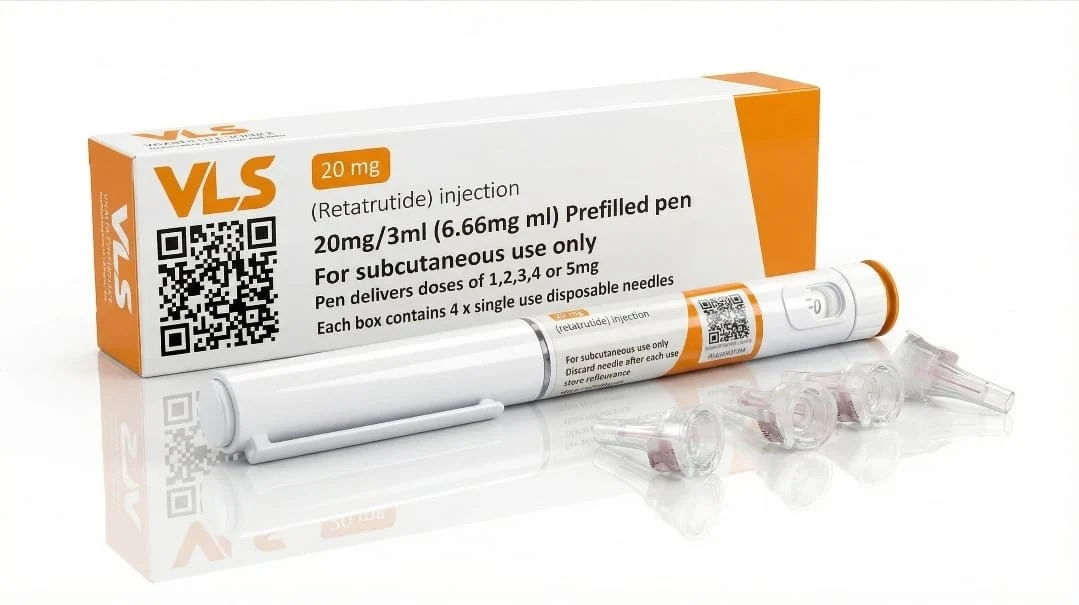
VLS Retatrutide 20mg
VLS Retatrutide 20mg is being hail as a potential “triple threat” in the fight against obesity and metabolic dysfunction. Learn what Retatrutide is, how it works, the science behind the dosage (specifically the 20mg concentration), and what current research tells us about its future.
The world of metabolic health and weight management is evolving rapidly. For years, the spotlight has been on GLP-1 receptor agonists like Semaglutide. However, a new contender is generating significant buzz in the scientific community: Retatrutide.
VLS Retatrutide (What is it?)
Retatrutide (formerly known as VLS-001) is a novel investigational drug developed by Eli Lilly and Company. While its predecessor, Tirzepatide (Mounjaro/Zepbound), is a “dual agonist” targeting two receptors, Retatrutide takes it a step further.
It is a triple hormone receptor agonist, meaning it is designed to activate three different naturally occurring pathways in the body simultaneously:
-
GIP (Glucose-dependent Insulinotropic Polypeptide)
-
ukGLP-1 (Glucagon-like Peptide-1)
-
Glucagon
By targeting these three receptors, researchers hope to create a synergistic effect that not only manages blood sugar but also significantly accelerates energy expenditure and fat loss.
How Does the “Triple Agonist” Mechanism Work?
To understand why Retatrutide is so promising, it helps to break down the role of each receptor:
-
GLP-1 Activation: This is the foundation of modern weight loss drugs. GLP-1 slows down gastric emptying (making you feel full longer) and signals the brain to reduce appetite.
-
GIP Activation: GIP is thought to enhance the body’s sensitivity to insulin and may also help improve how the body breaks down fat. In early trials, GIP has been shown to potentially reduce the nausea often associated with pure GLP-1 drugs.
-
Glucagon Activation: This is the “game changer.” Unlike GLP-1 and GIP, which primarily target insulin and appetite, glucagon directly impacts energy expenditure. It signals the body to burn stored fat for energy and increases metabolism.
By combining these three actions, Retatrutide aims to address weight loss from multiple angles: reducing calorie intake (appetite) and increasing calorie output (metabolism).
The 20mg Dosage: What the Research Says
When discussing Retatrutide in research settings, the 20mg dosage is a significant point of reference. In Phase 2 clinical trials, patients were randomize into different dosage groups to determine efficacy and safety.
According to data published in The New England Journal of Medicine (June 2023):
-
Participants receiving the highest doses (8mg and 12mg) showed substantial weight reduction.
-
However, the data projections for the upcoming Phase 3 trials suggest that doses like 20mg and higher are being explore to maximize the metabolic impact, particularly regarding the “glucagon” component.
The VLS Retatrutide 20mg dosage is theorized to be the “sweet spot” where the glucagon agonism becomes pronounce enough to significantly increase daily energy expenditure without causing adverse effects on blood glucose levels.
Retatrutide vs. Semaglutide vs. Tirzepatide
To put Retatrutide’s potential into perspective, here is a simplified comparison:
-
Semaglutide (Ozempic/Wegovy): Single agonist (GLP-1 only). Average weight loss in trials: ~15% of body weight.
-
Tirzepatide (Mounjaro/Zepbound): Dual agonist (GIP/GLP-1). Average weight loss in trials: ~20-22% of body weight.
-
Retatrutide (VLS): Triple agonist (GIP/GLP-1/Glucagon). Early Phase 2 trials showed average weight loss of up to 24% at 48 weeks (on the 12mg dose), with higher doses like 20mg currently under investigation to potentially exceed that threshold.
This data suggests that Retatrutide could become the most effective pharmacological intervention for obesity to date.
Potential Benefits and Clinical Applications
If approve by regulatory bodies like the FDA, Retatrutide could be prescribe for:
-
Chronic Weight Management: For individuals with obesity (BMI ≥ 30) or overweight individuals (BMI ≥ 27) with at least one weight-related condition.
-
Type 2 Diabetes Management: By improving insulin sensitivity and beta-cell function through GIP and GLP-1 activity.
-
Metabolic Dysfunction-Associated Steatotic Liver Disease (MASLD): Because of its potent effects on fat metabolism (via glucagon), researchers are optimistic about its potential to reduce liver fat.
Important Considerations and Side Effects
As a powerful incretin mimetic, VLS Retatrutide 20mg carries a side effect profile similar to others in its class, though the intensity may vary. Common side effects noted in trials include:
-
Nausea
-
Diarrhea
-
Vomiting
-
Constipation
-
Increased heart rate (heart rate monitoring is a key part of current trials due to the glucagon activity).
It is also crucial to note that Retatrutide is still investigational. Not been approved for general use by the FDA, EMA, or other health authorities. They are currently available only in controlled clinical trials.
Buy VLS Retatrutide
Buy vls retatrutide. It represents the next frontier in obesity pharmacology. By moving beyond dual agonism to include glucagon activation, it has the potential to redefine what is possible in medical weight loss. The 20mg dosage, in particular, is a focal point for researchers looking to maximize the metabolic burn associated with this molecule.
As we await the results of larger Phase 3 trials, the scientific community watches with cautious optimism. If the safety data holds up, Retatrutide could soon become the gold standard for treating obesity and its related complications.
Frequently Asked Questions (FAQs)
Q: Is Retatrutide the same as VLS?
A: Yes. VLS is a common shorthand derived from the original research name (VLS-001) and is often used interchangeably with Retatrutide in scientific discussions.
Q: Is Retatrutide 20mg approved for weight loss?
A: No. Retatrutide is an investigational compound currently in clinical trials. It has not yet been approved by the FDA or other regulatory agencies for any medical use.
Q: How does the 20mg dosage compare to starting doses?
A: Like other peptides in this class, treatment would likely begin with a much lower “starter” dose to mitigate side effects, gradually titrating up to a maintenance dose like 20mg over several weeks or months.

Reviews
There are no reviews yet.