
Description
Retatrutide UK
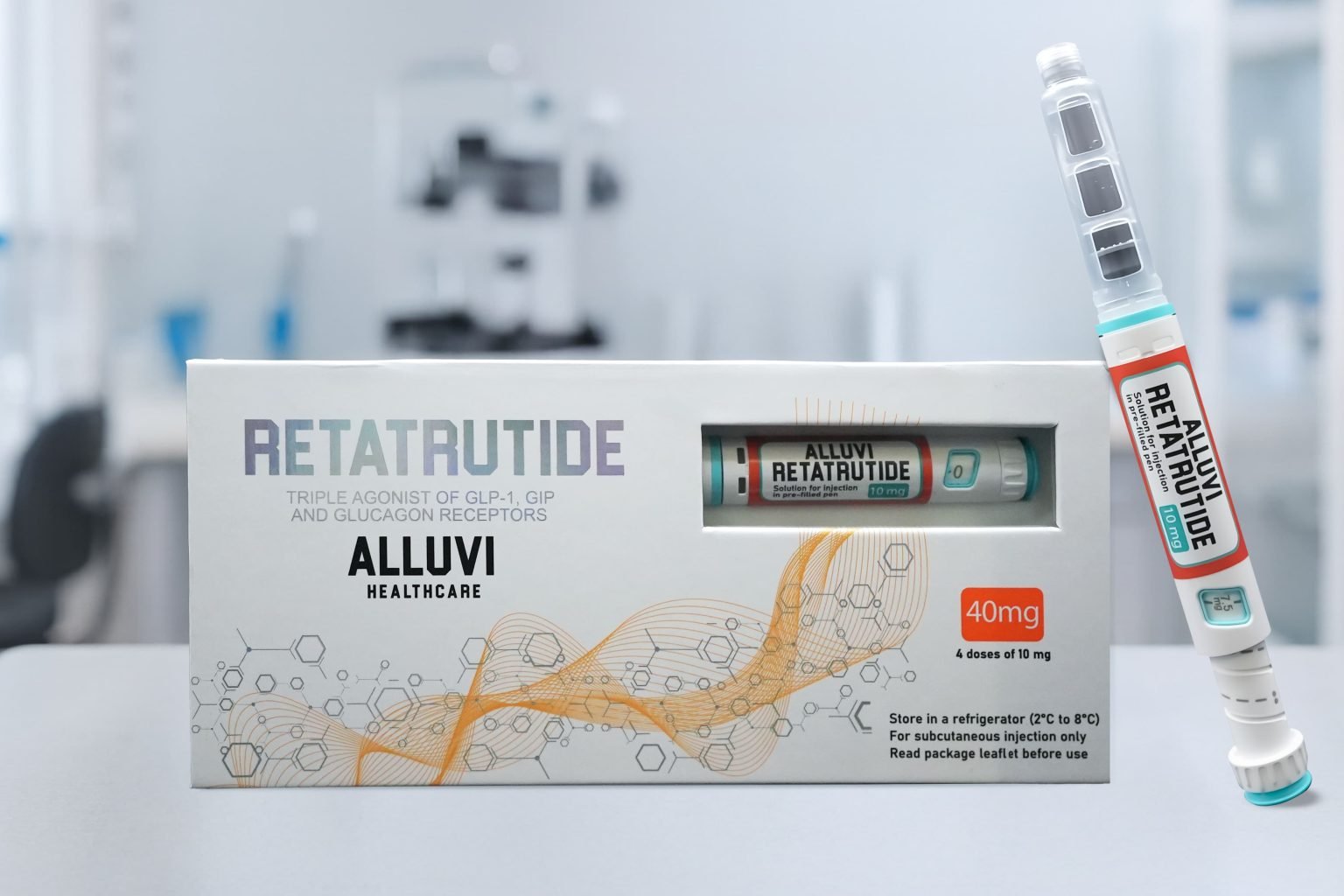
Retatrutide UK is an investigational drug candidate developed by Eli Lilly and Company. The same manufacturer behind the highly successful weight loss medication Mounjaro. It belongs to a new class of medications called triple hormone receptor agonists, Meaning it simultaneously targets three distinct metabolic pathways in the body.
Medical experts have noted that retatrutide shows the potential for exceptional weight-loss outcomes that, if maintained. Could meaningfully improve mobility, obesity-related health conditions, and overall quality of life for patients. However, they also caution that the speed and scale of weight loss raise important questions about metabolic consequences. Highlighting the need for nutritional support, resistance exercise, and close monitoring throughout treatment.
The gastrointestinal side effects and emerging dysesthesia signal demonstrate the importance of cautious dose titration and ongoing safety evaluation, particularly given the relatively high discontinuation rates observed in clinical trials.
Pharmacists and healthcare providers will be central to supporting safe titration, early detection of adverse effects. And personalized patient guidance as evidence continues to develop and the medication potentially moves toward approval.
Retatrutide Buy UK
To understand why retatrutide is so promising, it’s essential to understand the three hormones it mimics and how they work together to promote weight loss.
GLP-1 Receptor Activation
GLP-1 is an incretin hormone secreted from the intestinal tract in response to meals. When retatrutide activates GLP-1 receptors. It produces several effects that are foundational to its weight loss capabilities. It slows gastric emptying, which makes you feel full longer after eating. Signals the brain to reduce appetite by acting on the hypothalamus, the body’s hunger control center. Also, it stimulates insulin release while decreasing glucagon secretion, helping to regulate blood sugar. And it reduces food intake through effects on reward-related brain regions that influence eating behavior.
GIP Receptor Activation
GIP is another incretin hormone secreted from intestinal cells after eating. Its activation contributes to weight loss in ways that complement GLP-1 activity. GIP enhances insulin sensitivity and improves how the body processes energy from food. It further reduces appetite through its negative impact on gastric emptying. It stimulates additional insulin release from pancreatic cells, working in tandem with GLP-1. And uniquely, unlike GLP-1 which suppresses glucagon, GIP actually enhances glucagon release, creating a balanced hormonal effect.
Glucagon Receptor Activation
This is the key differentiator that sets retatrutide apart from existing medications. Glucagon activation directly increases energy expenditure by stimulating metabolism throughout the body. It promotes fat burning through a process called lipolysis while simultaneously inhibiting fat storage. It works alongside GIP and GLP-1 to create a comprehensive metabolic effect that addresses weight loss from multiple angles.
By combining these three mechanisms, retatrutide addresses weight loss from multiple angles simultaneously, reducing calorie intake through appetite suppression. While increasing calorie output through enhanced metabolism and fat oxidation. This synergistic triple action is why retatrutide is expected to be more effective than both semaglutide, which targets only GLP-1, and tirzepatide, which targets GLP-1 and GIP.
Clinical Trial Results: The Evidence So Far
Phase 2 Trial Results
The Phase 2 clinical trial established retatrutide’s impressive efficacy profile. At the highest weekly dose of twelve milligrams, participants lost an average of more than twenty-four percent of their starting body weight over forty-eight weeks. Within this group, a remarkable twenty-six percent of participants lost at least thirty percent of their initial body weight.
Even lower doses produced substantial results. The four milligram weekly dose resulted in an average weight loss of seventeen percent over forty-eight weeks. Among these participants, ninety-two percent lost at least five percent of their starting body weight, seventy-five percent lost at least ten percent, and sixty percent lost at least fifteen percent. Retatrutide UK
Recent Phase 3 TRIUMPH-4 Results
The most recent and impressive data comes from the Phase 3 TRIUMPH-4 trial, announced in late 2025. This study involved hundreds of participants with obesity or overweight who also met criteria for knee osteoarthritis, a condition often exacerbated by excess weight.
The results exceeded even optimistic expectations. Participants taking twelve milligrams of retatrutide lost an average of nearly twenty-nine percent of their body weight at sixty-eight weeks. Those taking nine milligrams lost an average of more than twenty-six percent. By comparison, the placebo group lost just over two percent.
The trial also revealed impressive secondary outcomes that demonstrate the broader health benefits of significant weight loss. More than half of participants on the twelve milligram dose achieved at least twenty-five percent weight loss, while nearly forty percent achieved at least thirty percent weight loss, and almost a quarter achieved at least thirty-five percent weight loss. Retatrutide UK
Participants experienced significant reduction in knee osteoarthritis pain, with pain scores dropping by an average of more than four points on a ten-point scale compared to just over two points with placebo. The treatment also improved cardiovascular risk markers, including reduced non-HDL cholesterol, triglycerides, and inflammation. Systolic blood pressure was lowered by an average of fourteen millimeters of mercury at the highest dose.
Systematic Review Findings
A systematic review published in mid-2025 analyzed data from three clinical trials encompassing more than one thousand patients. The average participant age was fifty-four years, with a balanced gender distribution. The review confirmed that the twelve milligram dosage showed the most significant reductions in body weight, BMI, and waist circumference, with gastrointestinal effects being the most commonly reported adverse events.
Ongoing Trials
The TRIUMPH program, which began in 2023, includes four global registrational trials with more than five thousand participants. Additional results are expected throughout 2026, including data on a four milligram maintenance dose alongside the nine and twelve milligram doses. There are also seven additional Phase 3 trials evaluating retatrutide for obesity and type 2 diabetes, expected to complete in 2026.
How Retatrutide Compares to Other Weight Loss Medications
Retatrutide vs. Tirzepatide
Tirzepatide is a dual agonist targeting GLP-1 and GIP receptors, while retatrutide adds glucagon receptor activation to become a triple agonist. This additional mechanism appears to translate into greater efficacy. Retatrutide has shown up to nearly twenty-nine percent weight loss at sixty-eight weeks, compared to tirzepatide’s approximately twenty-two percent weight loss at seventy-two weeks in clinical trials. While tirzepatide is FDA-approved and available now, retatrutide remains investigational. Both share similar gastrointestinal side effects, though tirzepatide’s safety is better established through real-world use.
Retatrutide vs. Semaglutide
Semaglutide is a single agonist targeting only GLP-1 receptors, making it the least powerful of the three in terms of weight loss efficacy. Semaglutide produces average weight loss of approximately fifteen to twenty-one percent depending on dose and treatment duration, substantially less than what retatrutide has demonstrated. In osteoarthritis trials, retatrutide achieved approximately seventy-five percent pain reduction compared to semaglutide’s approximately forty-two percent in previous studies. Retatrutide UK
Retatrutide vs. Other Investigational Agents
A comprehensive review of twelve GLP-1 agonists found that retatrutide produced the top three results among all investigational agents studied. The twelve milligram weekly dose led to more than twenty-four percent weight loss, followed closely by an eight milligram rapid uptitration dose and a standard eight milligram dose.
Research in Special Populations
A recent study examined the efficacy of GLP-1 analogs in an animal model representing a genetic form of obesity resistant to many treatments. The results showed that semaglutide produced approximately twenty percent body weight reduction, retatrutide produced approximately twenty-four percent reduction, and tirzepatide produced approximately thirty-two percent reduction. These findings suggest that GLP-1 analogs may provide effective treatment options even for patients with genetic forms of obesity that have historically been difficult to treat.
Safety Profile and Side Effects
Common Side Effects
Like other medications in this class, retatrutide’s most common side effects are gastrointestinal and dose-related. In clinical trials, reported adverse events included nausea, diarrhea, constipation, vomiting, and decreased appetite. Nausea was reported in up to forty-three percent of participants, diarrhea in thirty-three percent, and vomiting in twenty-one percent. Retatrutide UK
These side effects are typically transient, classified as mild to moderate, and most likely to occur when treatment first starts or when the dose increases. They can often be managed at home through practical strategies. Eating smaller, more frequent meals helps minimize gastrointestinal distress. Avoiding spicy, greasy, or fatty foods reduces digestive irritation. Choosing plain, bland foods like toast and crackers provides easily digestible nutrition. Staying hydrated with frequent sips of water prevents dehydration from any fluid loss. Getting adequate rest supports overall recovery. Drinking peppermint or ginger tea can help calm nausea naturally.
Discontinuation Rates
In the TRIUMPH-4 trial, discontinuation rates due to adverse events were approximately twelve percent with the nine milligram dose, eighteen percent with the twelve milligram dose, and four percent with placebo. Some discontinuations were attributed to perceived excessive weight loss in patients with lower body mass indexes, highlighting the medication’s potency and the importance of appropriate patient selection.
Emerging Safety Signal: Dysesthesia
A new safety signal emerged in the TRIUMPH-4 trial that had not been reported in Phase 2 studies. Dysesthesia, an abnormal sense of touch causing normal sensations to feel unusual or painful, was reported in nearly nine percent of patients on the nine milligram dose, nearly twenty-one percent of patients on the twelve milligram dose, and less than one percent in the placebo group.
Importantly, these events did not appear to lead to treatment discontinuation, but researchers are watching for this signal in upcoming study readouts. Dysesthesia is often a symptom of larger diseases like multiple sclerosis or diabetes, so continued monitoring will be essential as the medication moves toward approval.
Other Safety Considerations
Serious adverse events were rare across trials, as were events necessitating treatment discontinuation. Rare events included pancreatitis occurring in less than two percent of participants, severe gastrointestinal and biliary disorders in three and a half percent or less, and psychiatric disorders including insomnia and mood alterations in fifteen percent or less. Deaths were extremely rare across all treatment arms in various trials.
Dosage and Administration
Clinical Trial Dosing
It is critical to understand that there is no approved dose of retatrutide, as the medication remains investigational. Any dosing information available comes strictly from clinical trial protocols and should never be used for self-administration. Retatrutide UK
In Phase 2 clinical trials, retatrutide was administered as a once-weekly subcutaneous injection. Starting doses included one, two, or four milligrams. Maintenance doses ranged from one, four, eight, or twelve milligrams per week. The maximum dose studied was twelve milligrams per week. Dose escalation followed a pattern similar to other weight loss medications, with increases occurring approximately every four weeks to allow the body to adjust and minimize side effects.
Comparison to Approved Medications
For context, approved GLP-1 medications follow similar titration schedules. Tirzepatide starts at two and a half milligrams weekly and titrates upward to five, seven and a half, ten, twelve and a half, or fifteen milligrams. Semaglutide starts at zero point two five milligrams weekly and titrates upward to zero point five, one, or two milligrams.
If approved, retatrutide is expected to follow a similar weekly injection titration schedule, but the exact regulatory-approved regimen will only be established after thorough review by health authorities.
The Danger of Unregulated Sources
Why Online “Dosage Charts” Are Unsafe
A critical warning for consumers is that retatrutide is NOT available for purchase anywhere. The only legal access is through participation in regulated clinical trials.
Despite this, reports indicate that black market versions are being sold through social media channels and websites, often labeled “for research purposes only” to evade regulations. These products are counterfeit and not authentic pharmaceutical-grade drugs. They are potentially toxic, containing unknown and dangerous ingredients. They are completely unregulated, with no quality control or sterility guarantees. And they are likely incorrectly dosed, with actual dosages that may not match what’s stated on the label.
Health authorities have issued warnings that products sold as “research peptides” are not intended for human use and should never be self-administered. Home mixing of powders purchased online carries serious contamination and infection risks that no consumer should accept.
How to Report Illegal Products
In the UK, any suspected counterfeit or unregulated medications should be reported to the appropriate health authority reporting systems. In the US, similar programs exist for reporting unapproved GLP-1 drugs. These reporting mechanisms help regulators track and shut down illegal operations, protecting potential future victims from harm.
When Will Retatrutide Be Available?
Current Status
Retatrutide remains investigational and unapproved worldwide. It is currently in Phase 3 clinical trials, with the TRIUMPH program studies expected to complete in 2026.
Potential Timeline
If Phase 3 trials continue to confirm safety and effectiveness, the manufacturer could submit for regulatory approval as early as 2026, with possible prescribing availability by 2027. In the UK specifically, retatrutide is unlikely to be approved before 2027, as the MHRA will need to review all safety and effectiveness data before making a decision. Retatrutide UK
Availability Pathways
If approved, retatrutide will likely be available through private healthcare providers first, including online doctor services and specialist clinics. NHS coverage may take longer, as the health service has its own approval and funding processes that operate independently of regulatory authorization.
Expected Cost
While official pricing isn’t established, retatrutide is expected to be priced similarly to other weight loss injections. For comparison, currently available weight loss medications cost from approximately one hundred fifty to four hundred pounds per month depending on the specific drug and dosage. Once approved, official pricing will be confirmed by the manufacturer and healthcare providers.
Long-Term Considerations
Weight Regain After Discontinuation
One ongoing concern with all GLP-1 medications is the potential for weight regain after stopping treatment. Like other medications in this class, retatrutide is intended for chronic use, and patients should discuss long-term treatment plans with their healthcare providers. Obesity is a chronic disease that often requires ongoing management, and stopping medication typically leads to gradual weight regain over time.
Muscle Loss Concerns
The speed and scale of weight loss with retatrutide raise important questions about metabolic consequences, including the theoretical risk of muscle loss. Experts emphasize the need for nutritional support to ensure adequate protein intake throughout treatment. Resistance exercise is essential to preserve lean mass while losing fat. Close monitoring by healthcare professionals helps ensure that weight loss is healthy and sustainable. The proportion of lean mass loss relative to total weight loss with retatrutide appears similar to older GLP-1 medications, but this remains an area of ongoing investigation.
Quality of Weight Loss
Beyond simple BMI reduction, researchers are investigating the quality of weight loss—specifically, the ratio of fat mass to lean mass lost during treatment. This will be an important consideration as the medication moves toward approval, ensuring that patients lose primarily unhealthy fat while preserving metabolically active muscle tissue.c
Reviews
There are no reviews yet.